

Cold Plunge Benefits for Older Lifters: 2026 Guide
Table of Contents
- Why Cold Plunge Benefits Matter More After 50
- Physiological Benefits of Cold-Water Immersion for Older Lifters
- Cold Plunge Duration for Muscle Recovery: How Long Is Enough
- Best Practices for Cold Plunging After Lifting
- Cold Water Immersion Safety for Seniors: Contraindications and Protocols
- Choosing a Cold Plunge for a Home Gym
- Conclusion: Building a Recovery Routine That Lasts
- Frequently Asked Questions
Last Updated: September 13, 2026
Why Cold Plunge Benefits Matter More After 50
Cold plunge benefits for older lifters differ from what a 25-year-old gets. A lifter who once trained heavy three days a week starts needing four or five days to feel normal.

That shift is normal. What matters is how you respond.
This guide covers how cold-water immersion fits into a training week for lifters over 50, the mechanisms, how long to stay in, and which safety precautions are non-negotiable.
How Aging Changes Muscle Recovery
Muscle recovery slows with age because of changes in circulation, connective tissue elasticity, and the inflammatory response. DOMS lasts longer, and joint inflammation after heavy squats or deadlifts can persist for days.
According to the National Institute on Aging's resource on exercise and aging, older adults retain the ability to build muscle, but the recovery window between sessions widens. A common mistake is treating that wider window as a reason to train less. In practice, the better move is to train the same and recover more deliberately.
Physiological Benefits of Cold-Water Immersion for Older Lifters
Cold-water immersion means submerging the body in water held at a therapeutic temperature, typically 50 to 59 degrees Fahrenheit, for a controlled duration (peer-reviewed research). It triggers vasoconstriction and shifts the nervous system toward a parasympathetic state.
For older lifters, that addresses the two things that slow them down most: lingering inflammation and poor sleep. It works alongside protein intake, sleep, and programming, not as a substitute.
Inflammation Reduction and Joint Health
Inflammation reduction is the primary reason lifters over 50 gravitate toward cold plunges. Cold exposure constricts blood vessels, limiting swelling around stressed joints and reducing the ache after heavy pressing or pulling. The effect is temporary but makes the next session more tolerable.
Metabolic Rate, Mood, and Sleep
Metabolic rate rises modestly after cold exposure because the body burns energy to restore core temperature. The bigger effect for older lifters is neurological: cold immersion triggers sympathetic activation followed by vagus nerve stimulation, which many athletes describe as a sustained mood lift and deeper sleep. Better sleep supports muscle protein synthesis, exactly what a lifter over 50 needs to hold onto mass.
Cold Plunge Duration for Muscle Recovery: How Long Is Enough
The ideal cold plunge duration for muscle recovery is 10 to 15 minutes at 50 to 59 degrees Fahrenheit, within an hour of finishing your session. Past roughly 15 minutes, hypothermia and thermal shock risk rises faster than any benefit.
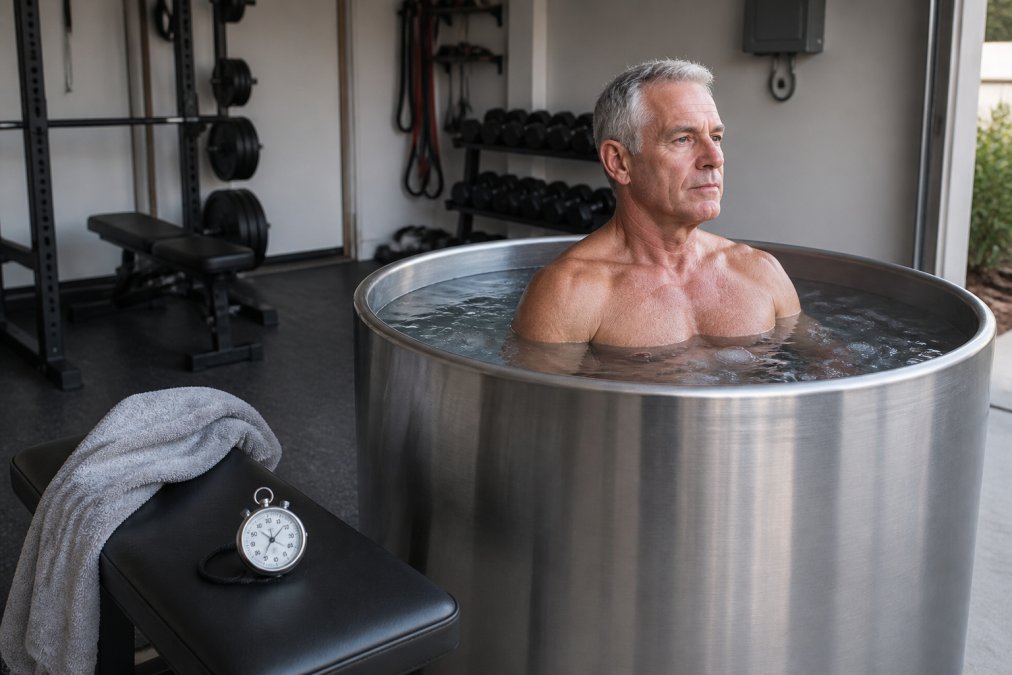
Beginners over 50 should start at 2 to 3 minutes and add a minute every few sessions. Acclimatization matters more than intensity: holding 10 minutes comfortably at 55 degrees beats white-knuckling 3 minutes at 45.
| Experience Level | Water Temp | Duration | Frequency |
|---|---|---|---|
| Beginner | 55-59°F | 2-3 min | 2-3x per week |
| Intermediate | 50-55°F | 5-10 min | 3-4x per week |
| Advanced | 45-50°F | 10-15 min | 4-5x per week |
Best Practices for Cold Plunging After Lifting
Best practices for cold plunging after lifting start with timing and end with a warm-up you do not skip. Plunge after your session, not before, and never enter cold, tired, or alone.
For a lifter over 50, the recovery window is wider and the margin for error smaller, so the protocol must be built around gradual exposure rather than toughness. Older athletes often chase the coldest water they can tolerate on day one, then quit two weeks later. The lifters who stick with it start warm and add cold slowly.
A Graduated Exposure Schedule for Older Beginners
Use this as a starting framework, not a prescription. Adjust down if you have cardiovascular history, and clear the plan with a physician first.
| Week | Water Temp | Duration | Frequency | Focus |
|---|---|---|---|---|
| 1-2 | 59-64°F | 1-2 min | 2x per week | Breathing control, entry comfort |
| 3-4 | 57-61°F | 2-4 min | 2-3x per week | Tolerating chest-deep immersion |
| 5-6 | 54-59°F | 4-6 min | 3x per week | Shoulder-depth submersion |
| 7-8 | 52-57°F | 6-8 min | 3x per week | Post-lift recovery timing |
| Week 9+ | 50-55°F | 8-12 min | 3-4x per week | Maintenance dose |
Two rules govern the schedule. Never increase temperature and duration in the same week, pick one variable. And if a session leaves you shivering more than 20 minutes afterward, you went too cold or too long.
Timing: Before vs. After a Heavy Session
After a heavy session is the right answer for most lifters over 50. Post-exercise cold-water immersion blunts inflammation and soreness, helping you return to training sooner. Pre-workout plunges can reduce power output, the last thing you want before a heavy set.
The more useful question is how soon after. Cold-water immersion within roughly an hour of finishing blunts the acute inflammatory response most effectively, but there is a trade-off: cold exposure in the immediate post-lift window may also dampen the muscle-building signaling that drives hypertrophy. For a lifter over 50 fighting sarcopenia, that matters.
A practical compromise many older lifters land on:
- On heavy strength days, wait 2-4 hours before plunging so you do not blunt the anabolic response, then plunge in the evening.
- On conditioning days, high-volume days, or days when joint pain is the limiter, plunge within an hour of finishing.
- On rest days, a morning plunge is fine and often improves sleep that night.
Entry Technique That Reduces Shock
Thermal shock is the biggest acute risk, and it is almost entirely a technique problem. The cold shock response, involuntary gasping, hyperventilation, and a spike in heart rate and blood pressure, peaks in the first 30 seconds.
- Warm up for 5 minutes before entering, even in summer. A brisk walk or a few bodyweight squats is enough.
- Enter feet first, then sit. Do not dive or jump in.
- Keep your hands out of the water for the first 30 seconds and control your exhale. Long, slow exhales suppress the gasp reflex.
- Submerge to the waist first, pause, then bring the water to chest level. Shoulder-depth immersion comes last.
- Keep your head above water unless you are experienced and supervised.
- Exit slowly, dry off immediately, and change out of wet clothing.
What to Do After You Get Out
Recovery does not end when you step out of the tub. Rewarming is part of the protocol.
- Dry off and put on warm, dry layers right away.
- Move for 5-10 minutes, walking, light mobility, or a warm shower, to bring core temperature back up gradually.
- Drink fluids. Cold immersion increases urine output, and dehydration makes the next session harder.
- Eat protein within a couple of hours, especially on training days. Cold plunge does not replace the nutrition that actually rebuilds muscle.
- Log the session: temperature, duration, and how you felt 12 hours later. Patterns emerge fast, and they tell you more than any general guideline.
Cold Water Immersion Safety for Seniors: Contraindications and Protocols
Cold water immersion safety for seniors determines whether a cold plunge helps you or sends you to the emergency room. Anyone over 50 with a cardiovascular condition, uncontrolled hypertension, or a history of arrhythmia should clear cold exposure with a physician first.
The American Heart Association's guidance on cold exposure and cardiovascular risk notes that sudden cold contact causes a sharp rise in heart rate and blood pressure. That response is exactly why thermal shock is the leading danger for older athletes.
What most general cold-plunge articles skip is that the risk profile changes with age in specific, predictable ways. Here is the list older lifters need.
Age-Related Conditions That Change the Risk Calculation
- Hypertension. Cold immersion drives a rapid rise in blood pressure. If your blood pressure is not well controlled, the spike can be dangerous. Get cleared, and do not plunge on a day you skipped your medication.
- Peripheral artery disease (PAD). Reduced circulation to the limbs means slower rewarming and higher risk of cold injury to the feet and hands. If you have PAD, keep extremities out of the water longer and rewarm deliberately.
- Coronary artery disease and prior heart attack. The cold shock response can trigger arrhythmias in a compromised heart. Supervised immersion only.
- Arrhythmias, including atrial fibrillation. Cold exposure is a known trigger. Do not plunge without cardiology clearance.
- Raynaud's phenomenon. Cold triggers vasospasm in the fingers and toes. Keep hands and feet out of the water or skip immersion entirely.
- Diabetes with peripheral neuropathy. Reduced sensation in the feet means you may not feel cold injury developing. Inspect your feet after every session.
- History of stroke or transient ischemic attack. The blood pressure spike is the concern. Physician clearance is mandatory.
- Joint replacement or recent surgery. Check with your surgeon on wound healing and immersion timing before resuming.
Medications That Interact With Cold Exposure
This is the gap almost no cold-plunge article covers, and it matters more after 50 because medication use rises with age.
- Beta-blockers blunt heart rate response, which can mask the warning signs of overexposure. You may not feel your heart racing even when it is.
- Blood pressure medications (ACE inhibitors, ARBs, diuretics) can amplify the drop in blood pressure after you exit the water, increasing dizziness and fainting risk.
- Blood thinners (warfarin, apixaban, rivaroxaban) raise bruising and bleeding risk if you slip or strike the tub.
- Antidepressants and antipsychotics can impair thermoregulation, making it harder for your body to manage core temperature.
- Sedatives and sleep medications slow reaction time and judgment, a serious problem in cold water.
- Thyroid medications affect metabolic rate and how quickly you rewarm.
Bring your full medication list to your physician and ask specifically about cold-water immersion. Do not assume general clearance covers it.
Warning Signs to Stop Immediately
Stop the session and get out if you experience any of the following:
- Dizziness, lightheadedness, or visual changes
- Numbness in the fingers, toes, or lips
- Shortness of breath that does not resolve within a minute
- Chest pain, pressure, or a racing or irregular heartbeat
- Confusion or difficulty speaking
- Uncontrollable shivering that does not stop after you exit
Non-Negotiable Protocols
- Never plunge alone if you are over 50 or have any cardiac history. Thermal shock can cause involuntary gasping and rapid heart rate within seconds of entry. A training partner or a supervised setting is the difference between a safe session and a medical emergency.
- Avoid alcohol beforehand. It impairs thermoregulation and judgment.
- Skip the plunge if you are dehydrated, sick, feverish, or sleep-deprived.
- Do not plunge within 48 hours of a vaccination or during an active infection.
- Keep a phone within reach, and tell someone your planned session time.
- Acclimatization should take weeks, not days. If you are pushing to go colder faster, you are doing it wrong.
Choosing a Cold Plunge for a Home Gym
Choosing a cold plunge for a home gym comes down to three things: depth, temperature control, and how much maintenance you will actually do. Older lifters benefit from a tub deep enough for full shoulder submersion, because partial immersion limits the therapeutic effect.
Perfected Health Co. carries several options built for exactly this. The RevX Acrylic X Tub Cold Plunge with LUX chiller and filtration stands over 34 inches tall, making it one of the deepest acrylic tubs available, so you can submerge above the shoulders while staying upright. For a more natural look, the Kooru Cold Plunge Tub is handcrafted from redwood, runs on standard 110V power, and requires minimal upkeep. If you want professional-grade durability, the Stainless Steel Plunge Pool with integrated chiller uses a 304 stainless steel liner wrapped in Canadian red cedar.

For a lower entry point, the Nicebeam Cryo Pro System is an inflatable option with a 216-gallon capacity that fits lifters up to 6'9".
Conclusion: Building a Recovery Routine That Lasts
The hardest part of cold plunging after 50 is not the cold, it is consistency. A recovery routine only works if you do it three or four times a week, so the equipment has to be easy to use, easy to maintain, and somewhere you walk past daily.
Perfected Health Co. builds home gym and recovery setups for exactly this purpose. Free shipping on most orders within the continental U.S., a 30-day return policy, and a curated selection of cold plunges engineered for durability mean you can set up a recovery space that lasts as long as your training does. Get started with Perfected Health Co. and build a recovery routine you will still be using five years from now.
Frequently Asked Questions
Are cold plunges good for older lifters over 50?
Cold plunges can help older lifters manage muscle soreness, reduce joint inflammation, and support post-exercise recovery. After 50, recovery slows and inflammation lingers longer, so controlled cold-water immersion gives you a tool to bounce back faster between sessions. The key is starting with short exposures of 1-2 minutes at 50-59°F and getting clearance from your doctor first, especially if you have heart or blood pressure conditions.
How long should an older lifter stay in a cold plunge for recovery?
Most research on cold plunge duration for muscle recovery points to 10-15 minutes total per week, split into sessions of 2-3 minutes at 50-59°F. Older lifters should start at 1 minute and add 30 seconds per session as they acclimatize. Longer is not better: past 15 minutes you raise hypothermia risk without added recovery benefit. Stop if you feel numb, dizzy, or start shivering hard.
Is it better to cold plunge before or after a heavy lifting session?
After. Cold-water immersion immediately before lifting can blunt nerve conduction and reduce power output, which matters more as you age. Post-lift plunging within 30-60 minutes targets inflammation and delayed onset muscle soreness (DOMS) when they peak. If you lift twice a day, avoid plunging between sessions if hypertrophy is your goal, since cold exposure may dampen muscle protein synthesis.
Are cold plunges safe for seniors with cardiovascular concerns?
Not without medical clearance. Cold-water immersion triggers vasoconstriction, a spike in sympathetic nervous system activity, and a rise in heart rate and blood pressure. For someone with uncontrolled hypertension, arrhythmia, or a history of heart attack, that cardiovascular strain is a real risk. Talk to your cardiologist first, never plunge alone, and keep the water at 55-59°F rather than near-freezing to reduce thermal shock.